

TANGERANG – IPA Convex 2026 Journalist Writing Competition has underscored the increasingly strategic role of the media in bridging complex upstream oil and gas issues with broader public understanding, amid growing challenges surrounding energy security, investment, and the global energy transition.
The competition, organized as part of celebration of 50th IPA Convex 2026, received around 150 article submissions from journalists across Indonesia, reflecting strong public and media interest in the future of the national upstream oil and gas industry. From the total submissions received, 30 selected articles advanced to the final judging stage.
The submitted works explored a wide range of strategic themes, including national energy resilience, upstream investment competitiveness, regulatory reform, geopolitical dynamics, and the multiplier effects of the oil and gas industry on local economies and regional development.
According to the judging panel’s final assessment document, the competition aimed not only to recognize journalistic excellence, but also to strengthen public literacy regarding Indonesia’s upstream oil and gas sector and its long-term contribution to national energy security.
A Rinto Pudyantoro, lecturer at Universitas Pertamina and one of the competition judges, stated that the best articles were those capable of translating highly technical upstream oil and gas issues into stories that are relevant, accessible, and meaningful for the wider public.
“The strongest articles were not merely discussing production, investment, or energy contracts. They were able to explain how upstream oil and gas activities directly affect communities, regional economies, state revenues, employment opportunities, SMEs, and national energy resilience,” Rinto said in the judges’ concluding remarks.
The competition assessed the 30 shortlisted articles using a comprehensive evaluation framework, including thematic relevance, factual accuracy, analytical depth, originality of perspective, journalistic structure, language quality, and adherence to journalistic ethics and balance.
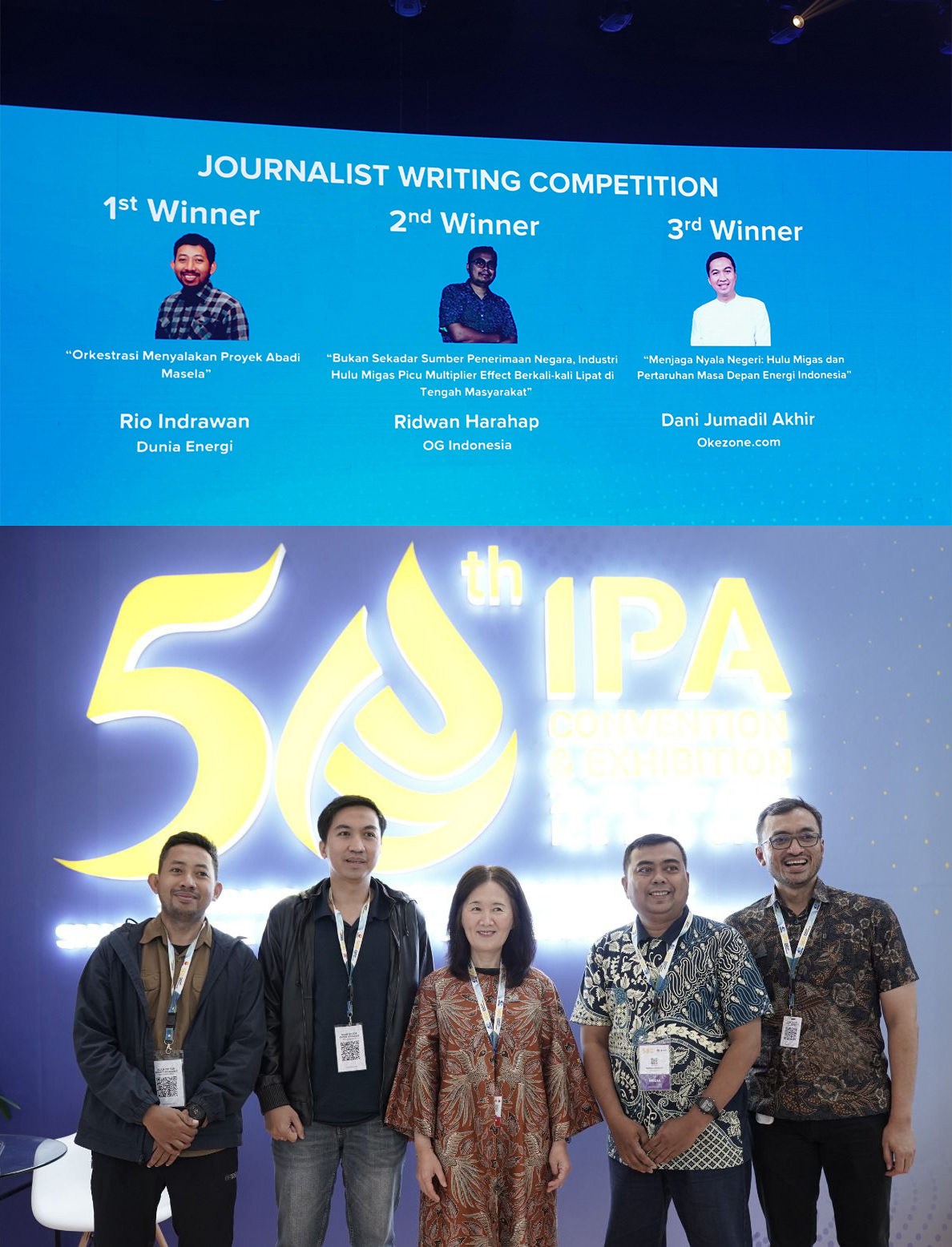
Among the top-ranked submissions, the article “Orkestrasi Menyalakan Proyek Abadi Masela” written by Rio Indrawan from Dunia Energi, emerged as the strongest contender, earning praise for its in-depth analysis of the Abadi Masela project, including its strategic importance to Indonesia’s energy resilience, investment climate, and industrial development.
The article “Bukan Sekadar Sumber Penerimaan Negara” from Ridwan Harahap, journalist of OG Indonesia, was recognized for its strong journalistic storytelling and its ability to vividly explain the multiplier effect of upstream oil and gas activities on local economies, public welfare, SMEs, supply chains, and regional development.
Meanwhile, third place went to Dani Jumadil Akhir of Okezone.com for the article Menjaga Nyala Negeri: Hulu Migas dan Pertaruhan Masa Depan Energi Indonesia, which received a total score of 89.7. The article was considered highly comprehensive for its ability to connect issues surrounding energy security, geopolitics, investment, and the impact of the upstream oil and gas industry on regional economic development and society.
Rinto noted that several standout articles successfully combined field reporting, fiscal data, policy analysis, and community perspectives to demonstrate that the upstream oil and gas sector extends far beyond energy production alone.
“Upstream oil and gas should not only be viewed through the lens of lifting, exploration, contracts, and investment. Behind those activities are impacts on state and regional budgets, local businesses, electricity supply, energy subsidies, employment, and the future of producing regions,” he explained.
The judging panel also highlighted the growing diversity of perspectives in energy journalism, with several articles exploring unconventional angles such as geoparks, tourism development, regional fiscal dependency, community livelihoods, and the role of local economies in energy-producing regions like Natuna.
Beyond selecting winners, the competition is expected to encourage the growth of higher-quality energy journalism in Indonesia — journalism that is informative, critical, balanced, accessible, and capable of contributing meaningful public discourse on the future of national energy security.